Friday, April 8, 2022

Cherry Blossom Festival in Washington, DC


This Spring, during the National Cherry Blossom Festival, I had the pleasure to spend a month between mid-March and mid-April in Annapolis, a "suburb" of Washington, DC.   To my delight, it was only a short drive to the Arboretum in the Capital's east.


Did I mention it?  The visit to the Arboretum is FREE, with no admissions to be paid. It is so large that most visitors drive through it, choose any of the many parking spots and walk from there on the extended lawns.  Take in the beauty of the park, and maybe have a picnic on the many benches and tables, placed everywhere.  What I missed were the Azaleas and Rhododendron in bloom, their flowers were already spent, so it is also worth to come late February or early March.


Don't miss the Gotelli Conifer Collection and the collection of legendary Japanese and Chinese bonsai trees. If you are wondering about the 22 Corinthian columns on a hill: they supported the east portico of the U.S. Capitol when it was built in 1828. Once the dome of the Capitol was completed in 1864, builders realized that the columns were not properly constructed to support the dome, creating an odd and unsettling visual. The strange aesthetic was not solved until 1958, and it took until the 1980s for the columns to find their resting place on the Ellipse Meadow in the Arboretum. 


My advice: visit during the week, early in the morning (the arboretum opens at 8 a.m.) and you will see only a dozen visitors on your way through the 446-acre property.  The easiest way to reach the National Arboretum is by car, as the grounds are located approximately 10 minutes from the U.S. Capitol Building.


If you choose to use Metro rail, exit at the 'Stadium Armory' station on the Blue and Orange lines. Then, use the B-2 Metrobus and exit on Bladensburg Road. From there, walk two blocks to R Street, where you will make a right. Two blocks further, you will find the Arboretum gates.  After 2 p.m. use the NY Ave entrance. Sounds a bit complicated, so you may take rather a taxi or Uber.


The annual bloom of Washington, D.C.’s cherry blossoms is a highly anticipated event.  It marks the arrival of spring and creates a beautiful backdrop to some of the capital’s most famous landmarks. 

Capitol of Maryland in Annapolis

 
There are tons of events during the Cherry Blossom Festival, from Japanese Art, Concerts, Block Parties, a Festival Parade, and even a Cherry Blossom Run. However, I like to admire the blooms and nature's awakening - and take photos of this beauty.

Capitol of Maryland in Annapolis, lots of Tulips

Other fantastic destinations to see lots of cherry trees and spring blooms in Washington are:

the Hillwood Estate, the surroundings of the Jefferson Memorial, or the Dumbarton Oaks 


Spring is early arriving in Washington DC and in Maryland, so mark your calendar and plan your spring vacation for next year! There is so much to explore for nature- and art lovers.

.

<><><><><>


.


Sunday, February 27, 2022

Unique Adobe Style in New Mexico


Santa Fe in New Mexico, one of my favored cities in the USA, is almost built entirely in the unique Adobe style.  No building is higher than three stories, and there are no highrises at all throughout the city.  Something totally different to other cities in the world! 


I love this natural style and had the pleasure to not only visit Santa Fe several times but also see how locals live in residential homes.  Santa Fe lies 7,200 ft high and has 325 sunshine days a year.  Every private home I saw has skylights to use the brightness in every room.


How Adobe Houses are Built
Adobe means a building material mix of earth and straw. ... The massive walls are important in New Mexico's desert climate.

Adobe-style homes have projecting wooden roof beams (vigas) extending through walls and typically have large wood components, like heavy doors, ceiling beams, and porch posts.  Earth-based materials, like sun-dried mud, clay, and straw, make the bricks to construct the exterior walls of traditional Adobe homes.


An extension of the roof serves as a barrier to collect rainwater, a precious resource in hot and dry climates.  The walls of an adobe house are usually thick, so they absorb heat on hot days and release it slowly during cool nights.


Adobe houses are traditionally built on a solid foundation, constructed from stone, cement, or even seashells.  Builders then erect adobe walls by stacking earthen bricks on top of each other.  An adobe brick is composed of compacted soil with a small clay consistency.


Adobe is strong and built to last.  Traditional pueblo construction used limestone blocks and/or large adobe bricks.  In a typical pueblo building, adobe blocks form the walls of each room as well as a central courtyard.  These buildings can be up to five stories tall.  Movement between stories was traditionally accomplished by the use of wooden ladders.  Pueblos were also traditionally entered through rooftop openings as ground floor rooms didn’t have doors. 

https://www.cabq.gov/artsculture/albuquerque-museum/casa-san-ysidro/documents/museum-lesson-architecture-of-new-mexico.pdf


Santa Fe, New Mexico’s capital, sits in the Sangre de Cristo foothills. It’s renowned for its Pueblo-style architecture and as a creative arts hotbed. Founded as a Spanish colony in 1610, it has at its heart the traditional Plaza. Santa Fe is home to many galleries featuring everything from traditional art to contemporary. 


The surrounding historic district’s crooked streets wind past adobe landmarks including the Palace of the Governors, now home to the New Mexico History Museum. For 400+ years, Santa Fe has improved with age. The nation's oldest capital city experienced waves of migrations along the three trails that led here via the rails, and Route 66. Artists, chefs, wellness experts, and other creative dreamers all bring their culture, talents, and experience with them.  


Santa Fe is a unique blend of Anglo, Spanish and Native Cultures.  The cities backdrop of the Sangre de Cristo mountains’ majesty and the spectacular sunsets over the Jemez range: nothing short of magic transpires. 


.

<><><><><>

.

Wednesday, February 23, 2022

Photo Impressions of Baja California Sur


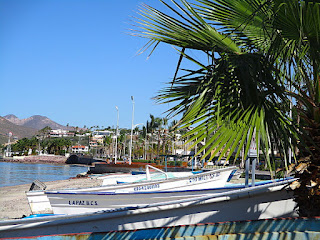
Spending several months this winter in La Ventana, Baja California Sur, at the Tango Azul Resort,  I was eager to explore this Southern Part of the peninsula on day trips.  La Ventana is one of the ten best places in the world for kite-surfers and other water sports.  La Ventana is a laidback beachside community where the water is warm, the wind is smooth, and the sunrise takes your breath away.

However, on days with less (or too much) wind there are lots of interesting one and two, or three-hour destinations to find hot springs, eco-parks, heritage towns with fine dining spots and museums, and some of the most beautiful beaches to swim and snorkel.  Not to mention the kayak or fishing boat trips, ATV, or cycle tours that are offered in many places.

Malecon in La Paz, Baja California Sur


La Paz, the Capital of Baja California Sur

Not even one hour away, La Paz, a city with an attractive Malecon, large harbor, and an attractive Old City part, museums, and numerous fine seafood restaurants invite visitors.  I was not only attracted by these places, public art, or by the many stores, but rather by the best 'Dentista' I ever experienced.  And all this for a third of what I would have paid in Canada.


Mission Church in La Paz, Baja

Driving to La Paz's beaches in the north, especially to Tecolotes, shows the most stunning emerald shallow waters of the Playa Pulguero and other fine sand beaches one can imagine.


Pulpuero Beach north of La Paz

El Triunfo

The first gold and silver mines in El Triunfo had been established in the late 1700s.  Once the largest city in Baja California Sur, it was home to more than 10,000 miners.  El Triunfo was the first town in the region to install electricity and telephones.  Pianos and other instruments were brought to El Triunfo from around the world and a piano museum still exists.  In recent years, to attract tourism, many of the original buildings have been restored and converted into restaurants, cafes, museums, and boutiques.  


Restored heritage building in El Triunfo
.


The wonderful Caffé El Triunfo in the town's middle has recently been joined by the refreshingly chic Bar El Minero with its large outdoor restaurant.  The new Museo Ruta de Plata is a beautiful new museum and cultural museum that tells the history of the mine and the region through interactive exhibits that will bring to life the rich history of the area.  


El Triunfo Museum

During the prosperous years of El Triunfo, the town was a cultural center for music and dance.  Visit the old Museo de la Música too.   All of the attention the town gets is leaving some people wondering—is El Triunfo the next Baja “it” spot?


Cactus Sanctuary


Hot Springs
Picture this: clear, warm, hidden pools nestled in between tall white rocks, green palm trees, and a sprinkling of cacti within the lush green grass. Such a place exists in a small pocket of Baja Sur, near Santiago, not far from highway #1. Try to visit in the early mornings when there are no visitors yet. Not far from the Santa Rita hot springs are other springs that can be reached via longer hikes and without having to pay an entry fee. These hot springs are mainly on private land, so don't leave any traces.


Pack lunch and snacks. There are picnic tables nearby where you can enjoy your food.
Also, bring loads of drinking water! It gets pretty hot if you stay all day.
Don’t forget to bring pesos for the entry fee. No cards or US Dollars are accepted.


Natural Hot Springs in the Santiago Area

Palomar in Santiago: What a gem!  Fine food, great atmosphere, friendly service  I found the Palomar restaurant by chance when returning from the Santa Rita hot springs. Never would have expected such a great place in this remote area.

Dig Your Own Hot Springs

Another, more adventurous spot for hot springs is the beach ten minutes north of La Ventana. There you dig your own 'pool' where you can soak in the warm water. Best an hour or two before and after high tide. If the water is too hot, just add some cool beach water and relax in the (free of charge) natural 'hot tub'. The best times are during the week when there are very few visitors.

Self-Made Hot Spring Pool

Los Cabos
The tourism hotspot's location at the tip of the Baja gives the area easy access to both the Pacific Ocean and the Sea of Cortez.  The most iconic scenery in Los Cabos is The Arch of Cabo San Lucas rock formations at Land’s End, also known as El Arco.  No trip to Los Cabos is complete without visiting this magical spot where the two seas collide. 

Cruises from 45 minutes to four hours, from rustic to luxury, can be booked online in advance to make sure you see the stunning rocks.  
You can hire a tour boat at the marina to take you there, or ask your hotel concierge to book a trip for you.  While you visit El Arco, you can also visit Pelican Rock, Lover´s Beach, and Divorce Beach, on the same tour.

The best time is the early morning or sunset cruises.  My tip: make it a two-day trip and book a hotel where you can park, and take a bus or taxi to the harbor as the inner city is not suited to driving and streets are pretty narrow and often only in one direction. 

Harbor in Cabo San Lucas


Todos Santos
An hour away from Cabo is this handsome, artsy heritage town - one of the prettiest in the whole Baja California Sur.  Small enough to walk everywhere, especially as every second or third building is a coffee shop or outdoor restaurant.  


Hotel California in Todos Santos


Shade is guaranteed by numerous large trees, huge blooming bougainvillea shrubs, and a city park.  Popular with artists, it’s known for its many galleries.  Surfers enjoy the high Pacific swells and beach hikers watching whales in winter and young.


Bougainvillea Tree 

Todos Santos is only ninety minutes away from Los Cabos, but it feels like you’ve been transported back to a slower, simpler time.  Large tourist hotels are unknown here, they are small and full of character.  While visitors and residents are still enjoying its under-the-radar vibe, Todos Santos is edging toward the limelight.  One wonders how long Todos Santos will remain one of Mexico’s best-kept secrets.


Mission Church in Todos Santos


.
<><><><><>
.


Friday, January 7, 2022

The Art of Building a Palapa in Mexico


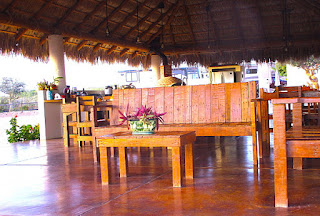
Traveling through Baja California one might discover lots of palapas, artfully built, using only natural materials: wood, sisal, and dried palm leaves. The most beautiful can be found at the Tango Azul Resort.


A palapa is an open-sided structure topped off with a thatched roof made from dried palm leaves. A palapa originally meaning "petiole of the palm leaf" is an open-sided dwelling.  It is very useful in hot weather and, therefore, very common on Mexican beaches and deserts.  


History of Palapas
Palapa is derived from the traditional construction methods of the 'bahay kubo' ("nipa hut") architectural style of the Philippines, carried to Nueva España (along with coconuts, which are not native to the Americas) via the Manila galleons during the Spanish colonial period.  Palapas are also common in Honduras and other Central American countries.  The builder of these great structures are not only craftsmen but also Artists.


Typical in Mexico
Ubiquitous throughout Mexico where they have long provided locals with protection against both the rain and sun, the palapa has also become a common feature within the tourist industry.  For visitors attracted to the region’s world-famous beaches, they provide a practical and picturesque sunbed for those who don’t necessarily wish to expose themselves to the full-on sun.


Benefits of Palapas
With an increasing focus on wellness and wellbeing tourism, the palapa is also the ideal structure for anyone wanting to partake in a massage or yoga class.  The palm roof provides excellent shelter from the elements while the open sides mean that you’re still outside in the fresh air; far preferable to being stuck indoors in a stuffy or frigid studio. You will find palapa shops, bars, restaurants, spas, gyms, water sports centers, etc.  


No matter how hot it is outside, there is always a cool breeze in a palapa.  The average price of palapa kits ranges from $5,000 - $8,000 - depending on the size and accessory options added such as the number of posts, and the type of thatch. 

See also how Palapas are built:


Finished ...


Enjoy your coffee or meals in the shade of the palapa at Tango Azul Resort 

- or simply watch the sun rising over the Sea of Cortez!

.

<><><><><>

.


Monday, December 13, 2021

Outstanding Glass Art by Dale Chihuly


Dale Chihuly, THE most outstanding glass artist, has explored new and old techniques, pushing the boundaries of contemporary art. He draws inspiration from the - natural - world around him. 
Living or traveling in the USA, Japan, or the UK?  You might not be far from a museum that exhibits his artwork.  Even many botanical gardens, among them the one in Columbus, Ohio, and St. Louis, MO, the Desert Botanical Garden in Phoenix, AZ, or the Kew Gardens in Great Britain, are displaying his artworks. 


Not only his museum in Seattle, WA, but many more in the USA and around the world offer a permanent exhibition of his work.  Permanent exhibitions of his glass art can be found, among many other places, in:

  • Toyama, Glass Art Museum, Japan
  • Oklahoma City, Museum of Art, OK, USA
  • St. Petersburg, Morean Arts Center, FL, USA
  • Tacoma, Art Museum, Washington, USA
  • Colorado Springs, Fine Arts Center, Colorado, USA
  • Pamela & Fred Buffett Cancer Center, Omaha, NE, USA
  • Corning Museum of Glass, Corning, NY, USA
  • Kew Gardens, UK


"I want people to be overwhelmed with light and color in some way that they've never experienced."
~ Dale Chihuly


Dale Chihuly began his career with weaving.  During a weaving class at the University of Washington, he first incorporated glass shards into woven tapestries in 1963.  This foray into glass led him to blow his first glass bubble in 1965, by melting stained glass and using a metal pipe.  Years later he revisited the idea of textiles and glass, drawing with intricate threads of glass, then fusing the threads onto the molten glass.  This pick-up drawing technique was used by Dale and his team in his Cylinders and other series.


From 1994 to 1996, the artist worked with glassblowers in Finland, Ireland, Mexico, and Italy to create 'Chihuly Over Venice', a series of Chandeliers that he hung over canals and in piazzas of his favorite city.


Dale Chihuly has completed ambitious architectural artwork installations all over the world.  Inspired by a lifelong interest in architecture and gardens, Chihuly creates site-specific sculptures for a wide variety of settings

Chihuly Studio creates some 30 site-specific pieces a year, ranging in price from $200,000 to millions of dollars, and has done commissions for collectors like Bill Gates and Bill Clinton.

.

<><><><><>

.