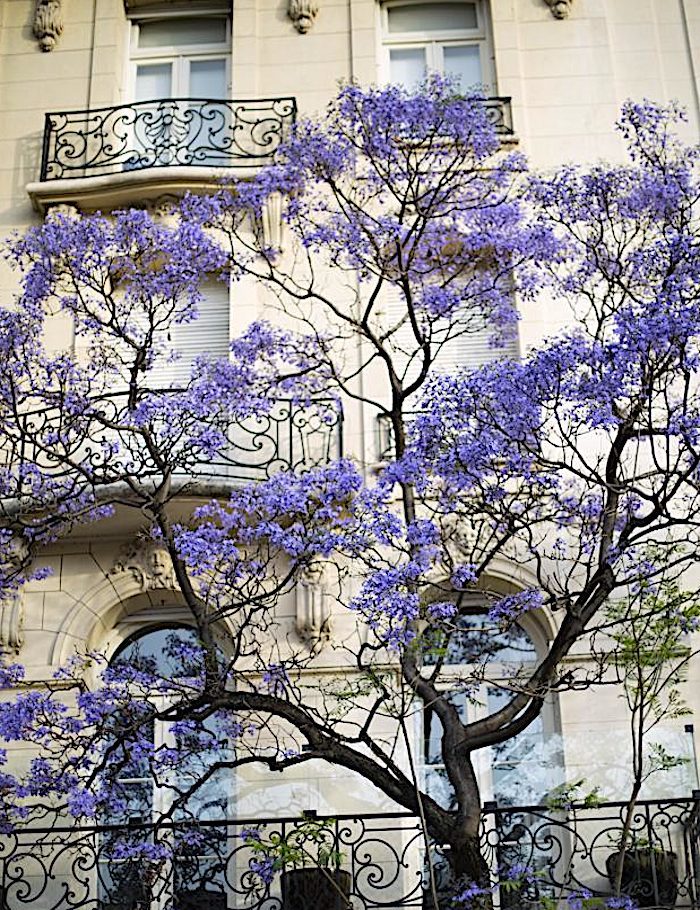
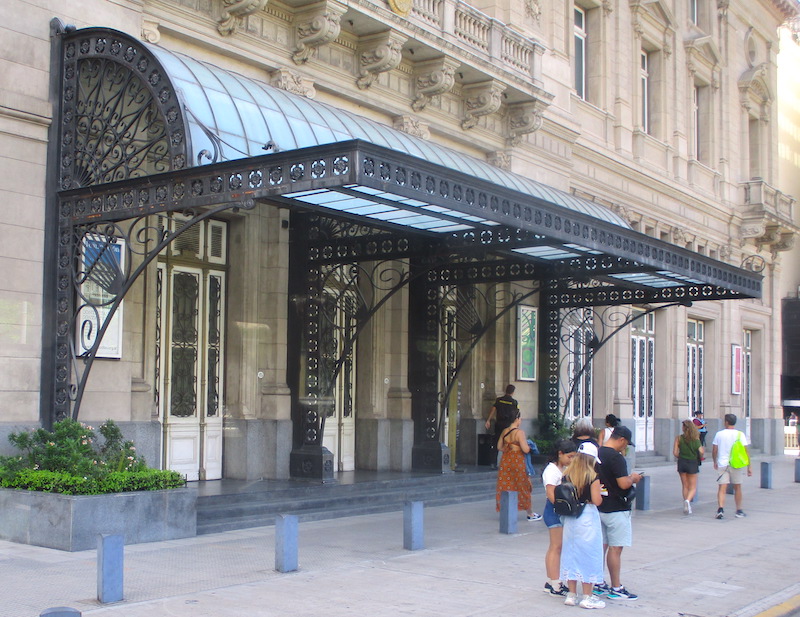
After months in Buenos Aires and daily photo tours, museum visits,
and meetings with locals, I would say: Forget Paris! Comparing these two
cities, Buenos Aires is the one I could travel to or live there forever.
.
.
Diving deep into the history and social facts of Argentina, learning about
the amazing flora and fauna, trying the delicious food and wine that is offered in
countless restaurants, coffee houses, bars, and bakeries showed me the rich
history and culture of Buenos Aires.
.
.
Buenos Aires´ prime time was between 1860 - 1920 and the countless
history, art nouveau, and art deco buildings in the city are amazing - including
the wonderfully created entrance doors, and even the old-fashioned elevators!
Don´t miss to visit the Barolo Tower, especially on an evening tour to see
the city lights from the 20th floor (some climbing necessary).
.
.
Marvelous malls are scattered throughout the city. The Galleria Guemes is a 100-meter
shopping mall, connecting Av. Florida with San Martin captivates visitors with its
beautiful glass dome and the old-fashioned elevators to the 16th floor.
.
.
Following the international exhibition of decorative art in Paris in 1925 the Art Deco style
became popular in Buenos Aires
.
.
The magnificent Kavanagh Building was the tallest in Latin America when it was completed
in 1936. Thanks to its stepped structure, it was possible to create several terrace gardens. It is
a UNESCO World Heritage site and has 105 apartments.
.
.
Buenos Aires has countless parks - small and large, botanical gardens, and
many tree-lined roads that give shade on hot summer days and help to freshen
the air. Thank goodness for the lack of diesel cars. This and the many trees in the
city help to keep the air clean. Public transportation is excellent with thousands
of busses, the underground, and hundreds of taxis. No need to use a car!
.
.
The iconic obelisk is a national historic monument, erected in 1936 to commemorate the
fourth centenary of the foundation of Buenos Aires in 1536. It marks the spot where the
Argentine national flag was raised for the first time.
.
.
House entrance doors are never bland, they are always artfully decorated
.
.
One of the most beautiful areas of Buenos Aires is Rosedal, a large rose garden mixed with
trees, bridges, a lake, and monuments
.
.
Another example of Art Deco architecture is the largest mall in Buenos Aires, the
Abasto Mall is a huge building with several 3-story high windows and hundreds of stores.
.
.
Avenida Corrientes is Buenos Aires´ theater heartland and many of these establishments
were built during the height of the Art Deco wave
.
.
San Martin Parc has numerous huge Palm trees and the parc gives shade during hot
summer days. I took this photo across from the Circular Militar, a huge castle-like,
french-style building that houses now a fine restaurant, a garden cafe, and a museum.
.
.
Some buildings have a mixed front decor of Art Deco, Art Nouveau, and Historicism
.
.
After the Art Nouveau period, architects and designers turned to the Art Deco style
with its more geometric style components, and often bolder colors. This international
style was mainly used for buildings between 1919 and 1939.
.
.
Casa Rosada, literally the Pink House, is the official workplace of the Argentinian president.
The palatial residence´s name is called Casa de Gobierno. Visitors can see some of the Casa
in daily free guided tours in Spanish and English.
.
.
Av Defensa is the center of antiques (and dulce de leche stores). It´s a pretty long road
believe me, I walked it from start to end, so take your time and spend at least half a day
there, stopping often in coffee shops, small restaurants, or the Mercado San Telmo.
.
.
Historicism style is the most popular architectural style in Buenos Aires - a pleasure
to walk the boulevards and take in the grandness of their buildings.
.
.
Buenos Aires Botanical Garden on Santa Fe Avenue is perfect for escaping the hot summer
days in December and January - and best of all it is free to visit! Several greenhouses dot the garden
and the most beautiful in a mixture of Art Nouveau and historicism can be entered.
.
.
Palacio Barolo is a landmark office building on 1370 Av de Mayo. It was built by
cotton magnate Luis Barolo and architect Mario Palanti. The building served as an
allegory for the structure and content of Dante Alighieris´ Divine Comedy.
.
.
Buenos Aires Metropolitan Cathedral is the main Catholic church and overlooks
Plaza de Mayo and Casa Rosada. Visitors can walk throughout the grand building and
admire the marvelous religious art. This is also the church where Pope Francis led the mass
as the archbishop of Buenos Aires
.
.
Magna Carta and the four regions:
A majestic, 25-meter-high monument, built in 1927 using white marble, commemorating
the ties between Spain and Argentina.
.
.
Teatro Avenida on 1222 Av de Mayo is a classic theater with perfect acoustics. It opened in 1908
and had been restored in 1994. The building style is academic art, influenced by the standards
of the Academie des Beaux-Arts. It has a capacity for 1,200 spectators.
.
.
Confiteria La Ideal, a coffee house, bar, and restaurant, was established in 1912, and beautifully restored.
Upstairs is the tango hall where inexpensive lessons are taking place almost daily.
.
.
This is just a small detail of the monumental palace of the Argentine National Congress. The huge
attractive building opened in 1906, is the legislative branch of the government of Argentina.
.
.
Tango in Buenos Aires is a great experience, no matter if you see a Tango show,
take Tango lessons - or if you watch impromptu Tango dances on the streets.
Buenos Aires is not only the birthplace of Tango, the culture and history of the city
are also deeply connected to the dance form.
.
.
734+ Bookshops: With roughly 25 bookshops for every 100,000 inhabitants,
Buenos Aires has more bookshop density than any other city in the world. Even
an old opera house has been converted into a mega bookstore, one of the most beautiful
bookstores in the world. The El Ateneo Grand Splendid on Av. Sta. Fe 1860
.
.
Palazio Paz was the largest and most luxurious residency in Buenos Aires. It is now home to
a private club for retired military officers. Tourists can visit the military museum that is housed in
the basement of the building, the Museo de Armas.
.
.
The work to design the El Rosedal (Rose Garden) was begun by French landscaper
Charles Thays, and finished by his disciple student Benito Carrasco in 1914.
.
.
What is called Historicism architecture in other parts of the world, is Ecletism in Argentina.
.
.
Detail on the Palazio Paz Entrance. The art of wrought iron decorative elements
can be found everywhere in Buenos Aires.
.
.
Almost regarded by Argentinians as a saint is Eva Peron, called Evita.
A whole museum is dedicated to her life and accomplishments. A former actress
and then Argentinian First Lady, she worked hard and tireless to help poor people,
especially women and children to be housed, educated, and established in society.
.
.
Another beautifully restored historicism residential building on Avenida de Mayo
,
.
Not only a must-see but also a quiet place in the buzzing city of Buenos Aires is the
Botanical Garden on Av Santa Fe, next to Plaza Italia and the Zoo. It is a place to relax
and discover a range of plants and trees, native to Argentina and other places. It contains
33 artistic works, such as sculptures, busts, and monuments along with five greenhouses.
And also a lot of homeless cats...
.
.
The Circulo Militar houses a private club, built in the remarkable French style, which is conserved
in all its splendor. Its restaurant El Retiro is open to the public.
.
.
Teatro Colón is considered one of the 10 best opera houses in the world due to its size and incredible
acoustics. It provides seating for 2,500 people and 500 standing rooms. Purchase tickets well in advance,
or take one of the backstage tours to view the stunning interior
.
.
Entrance to the Spanish-American Museum.
The beautiful Palazia Noel houses the world's most important collections of Spanish-American art.
.
.
The subway in Buenos Aires is an easy and dirt-cheap way to crisscross the city. Fares are less
than 30 cents, but you need a SUBE card which you can obtain at the airport or in kiosks
throughout the city, many of them are open 24 hrs. Most stations are also selling fares during
working days or they have an automate to top off your SUBE card. Two or three dollars on
your card gives you enough credit to use public transport via subway or bus for a month.
.
.
This building resembles the French castle style but was formerly used as a military
headquarter.
.
.
The IBERO Language School is in an old, restored Palacio, just steps from Av. de Mayo.
Foreign students can learn either Spanish or prepare for the TEFL test to teach
English in Argentina or abroad. Highly recommended!
.
.
The entrance door to the IBERO Language School on Av. Piedras, the hallway is laid out
in marble, and the old-fashioned elevator is made of wood and iron for a maximum of 3 people.
.
Even in the run-down La Boca quarter are some posh homes from a century ago.
.
.
A building boom from about 1880 to 1920 through the influx of wealthy Europeans created
an incredible Art Nouveau legacy.
.
.
The Italian-founded La Boca quarter is full of street art, sometimes delicate like this one,
sometimes more graffiti-like or just bright and wild colors.
.
.
Apartments in Buenos Aires in eclectic neighborhoods range from $400 to $800 per month.
Many are built about 100 years ago and have high ceilings and large windows. Almost every
apartment has at least one balcony.
.
.
There was also a huge Italian influence on the construction of some of the city´s central buildings,
for example the famous Casa Rosada, the San Telmo market, or private residencies.
.
.
The Rose Garden (Rosedal in Spanish) is more than a century years old and has received
the International Garden Excellence Award from the World Federation of Rose Societies.
Not only hundred-thousands of roses but also a lake with a Greek-influenced bridge, an
Amphit Theatre, an Andalusian patio, and a poet's garden with 26 busts of famous writers
from Dante Alighieri to Horge Luis Borges are the highlights of the Rose Garden.
.
<><><><><>
.
.