Sunday, December 28, 2025

Flying versus Driving the Shinkansen in Japan


No matter how tall you are, the ever-decreasing airplane leg room in economy class makes flying unpleasant — not only for tall passengers. I am only 5’3”, but I feel claustrophobic in airplanes. And if you have to place your small (hand) bag underneath the front seat, you are forced to sit pretty cramped during the whole flight.

There will be no room to stretch your legs. Walking around the plane is not an option on shorter flights as the aisles are often blocked by flight attendants pushing their carts or other passengers walking to or from the washrooms.

Press enter or click to view image in full size

Airports are often 20 miles or more from the city, which means sometimes an hour’s drive, either with an expensive taxi or even a more expensive airport parking fee. Add to this the hour or mostly hours waiting for security screening and the tedious boarding — the whole process is a nuisance! But there is a solution for these nasty flights:

What a relief, in Japan:
Board a Shinkansen, the high-speed “bullet train” and enjoy your trip.

Press enter or click to view image in full size

I liked especially:

  • Shinkansens are departing from downtown train stations
  • Relaxed boarding — no pushy fellow travellers
  • No waiting times and punctual departures
  • Entrances to the train cars are well-marked
  • Lots of space in the overhead for all your luggage
  • Japanese rail passengers are quietly traveling
  • Electrical outlets for your laptop & phone
  • WiFi worked well in almost all parts of Japan’s rail lines.
  • Cleaner and spacier washrooms than in airplanes
  • And if you travel “Gran Class”, you will be served lunch, drinks, dessert, and you will get a pair of slippers

See a short video about a First Class Luxury Shinkansen ride (Gran Class) here: https://www.youtube.com/watch?v=N8hjTsjEGpQ


It was pleasant for me that Japanese people did not talk loudly on the phone or among themselves when using trains or buses. Returning to Europe and North America and using public transportation was quite a shock …

Press enter or click to view image in full size

Japan Railway Passes

I bought my (paper) tickets at JR (Japanese Railway) stations or offices and learned that it is cheaper for tourists to purchase tickets for 3 or 5 days (in my case) than it is for locals. They state: “Multi-day Japan Rail (JR) Passes offer special, potentially cheaper travel for tourists than locals pay. But you should plan many long-distance journeys to make it cost-effective.”

In my case, it made more sense to buy those instead of having one JR-Pass for 15 or 21 days. With these passes, I could have traveled as long and as many routes as I wanted. Theoretically, I could have used them almost around the clock. I bought my passes separately for the area I traveled. On the Southern island of Kyushu, the next one I bought was in Shikoku, and then one on Honshu, the main island.

Press enter or click to view image in full size

Buying the 15- or 21-day passes online before traveling to Japan (and picking them up there) makes sense only if you ride trains almost every day and plan to cover the whole country.

  • 7-Day Pass: ¥50,000 (Ordinary) / ¥70,000 (Green Car / 1st Class)
  • 14-Day Pass: ¥80,000 (Ordinary) / ¥110,000 (Green Car / 1st Class)
  • 21-Day Pass: ¥100,000 (Ordinary) / ¥140,000 (Green Car / 1st Class)
    Prices are for 2025
    https://www.jrailpass.com/the-japan-rail-pass

You might choose between digital and paper tickets.

I timed my travels, using the JR-Pass in areas where I would only stop overnight or for a few hours in villages, beaches, or to visit a botanical garden. Then I would stay for several days in one city, for example, in Matsuyama, Kanazawa, Kagoshima, or Yokohama. From there, I made small day excursions, and at the end of my stay, I bought a new 3-day pass to take the Shinkansen for the next day's longer trips.

The JR-Pass can certainly be used for regular trains too, not only to ride the Shinkansen: local trains, JR buses and ferry services, as well as airport transfers (e.g. Tokyo Haneda to Tokyo Narita, or from Kansei to Osaka and Kyoto).

Shinkansen trains typically operate from around 6 AM to midnight, with the last trains leaving in the late evening. Check schedules to avoid being stranded, as there are no overnight Shinkansen services.

Press enter or click to view image in full size

In economy class, I never reserved a seat, even though it is FREE. For 1st class Shinkansen seats (Green Cars), it is mandatory. It is also highly recommended to book in advance, especially during peak travel periods. You can book at train stations, online (e.g., SmartEX), or via apps up to a year in advance.

It was amazing to see these futuristic-looking trains arriving at the train stations. They stop precisely in their positions. Once a bar opens, passengers stream out, and on the other side, passengers enter. The Shinkansen train departs exactly at the set time.

Press enter or click to view image in full size

In First class, an attendant hands you the menu from which you can choose your lunch. In the economy class, passengers may unwrap the dishes they bought at the train station, directly in stores, or from vending machines, located on many of the Shinkansen platforms.

“Why it’s Great for Tourists:

  • Exclusive to Foreigners: The JR Pass is specifically for international visitors, allowing unlimited rides on most JR trains (including Shinkansen) for a set period (3, 5, 7, 14, 21 days).
  • Cost Savings for Long Trips: It’s designed for extensive travel, covering expensive bullet trains and local lines, which quickly adds up with individual tickets.”
Press enter or click to view image in full size

For more than 60 Years

Japan is one of the very few countries in the world where these high-speed trains have been successfully in use for over 60 years.

The “bullet train” was invented and launched on October 1, 1964, with the opening of the Tokaido Line between Tokyo and Osaka, just before the Tokyo Olympics, revolutionizing rail travel as the world’s first high-speed rail system. The train can run up to 380 km/hour (236.12 mph). High-speed rail in other countries is barely comparable to Japan's Shinkansen routes.

Shinkansen trains are lighter than other high-speed rail rolling stock, which makes them more energy-efficient and doesn’t damage the rail track infrastructure as much. Maintenance is easier and cheaper.

Also, the Shinkansen Train system has a proven safety record, with no fatal accidents ever during the last 62 years.

On my long-term trip to Japan, I only flew once with ANA from Tokyo Haneda to Matsuyama. The rest of Japan, all the way down to the Southern tip, I used the Shinkansen and local trains.

This way, I saw many landscapes and cities, using this comfortable transportation. And I could stop and stay randomly somewhere, which would not have been possible with air travel.

I also enjoyed the pleasant, clean, and attractive train stations. It was a pleasure to browse through the lovely shops, cafes, and delicatessen stores. Japanese train stations stand out against those in other parts of the world. And they are the safest (I think) in the world.

Press enter or click to view image in full size

A Few Videos From People Who Show Their Train Ride on YouTube:

https://www.youtube.com/watch?v=UlGQxvXpoQw

https://www.youtube.com/shorts/T19thsGOSBs

https://www.youtube.com/watch?v=HG2Hy1zs5fg

https://www.youtube.com/watch?v=E0LXjUzp6Jc

Here is an Article from “Japan Guide” that Includes a Map of the Major Shinkansen Routes Plus Sightseeing Trips:
https://www.japan-guide.com/e/e2018.html


The country has immense distances: it is more than 3,800 km long, and the four largest islands are wonderful to explore, in addition to the many small, unique islands that are often a different world altogether.

Thanks for reading. Stay tuned for more about Japan and my trips there.

.

Photo: Wikipedia

A Must-See: Japan's Natural Treasures


Traveling in Japan is a must for plant and garden lovers!
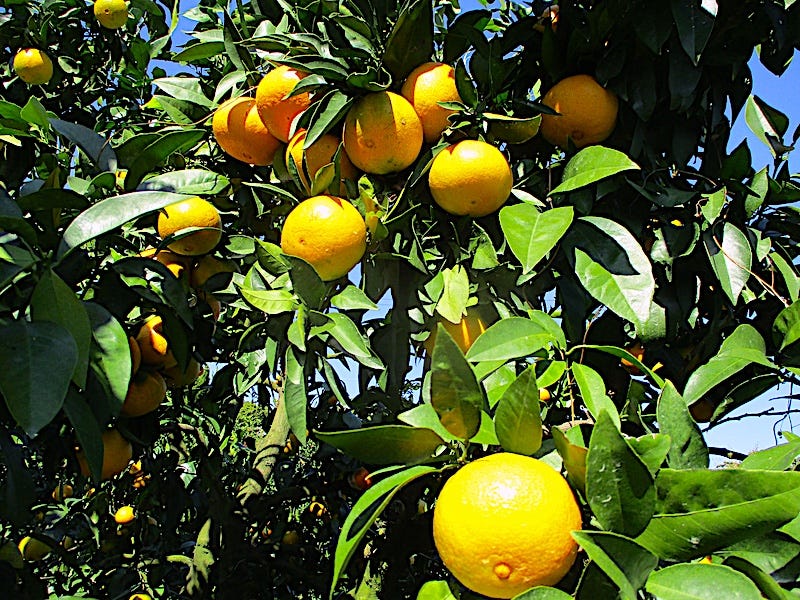
When traveling to a country, my interest is in the nature, landscapes, and plants growing there. During my long-term stay in Japan, I lived for weeks on a remote island, wandered along beautiful shores with crystal-clear waters, strolled through hundreds of orange and mandarin orchards, and tea plantations that covered the island.

I admired the amazing nature from Tokyo to Nagasaki on the southern tip of Japan, the gorges and waterfalls, erupting volcanoes, rice-fields and gardens, and cherished the wonderful forests of blue bamboo.

But I also visited the man-made famous “great gardens of Japan”.

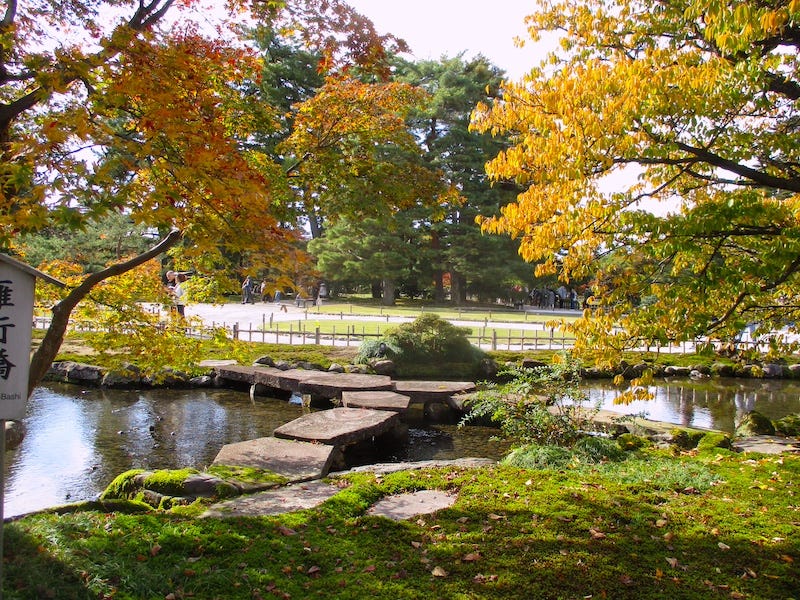
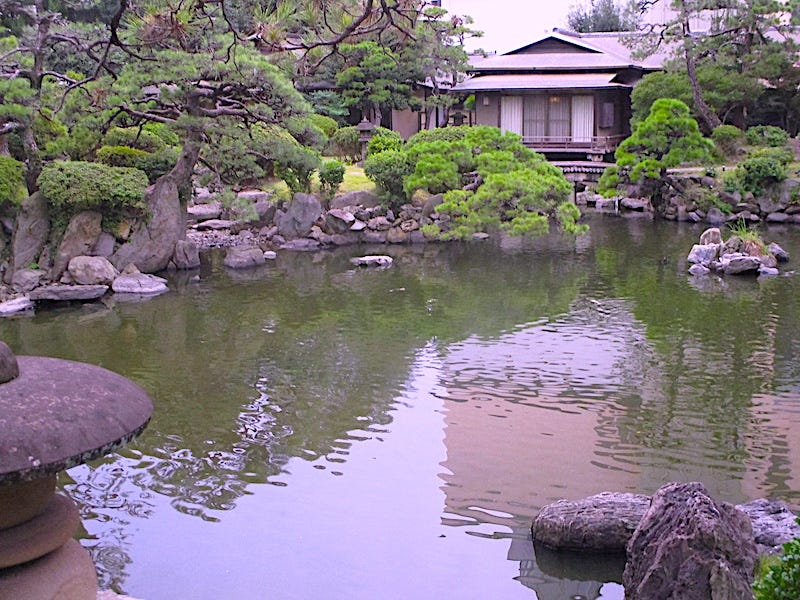
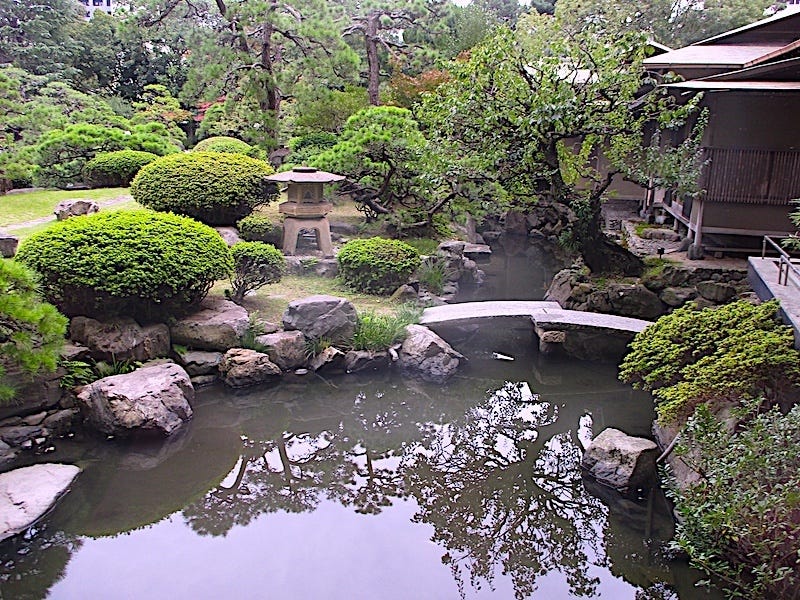
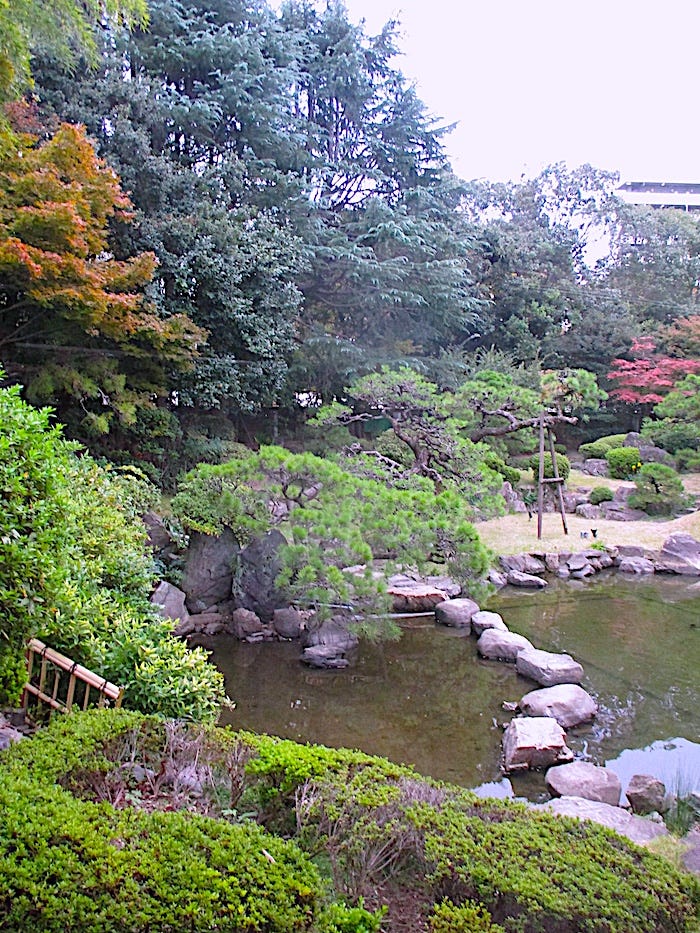
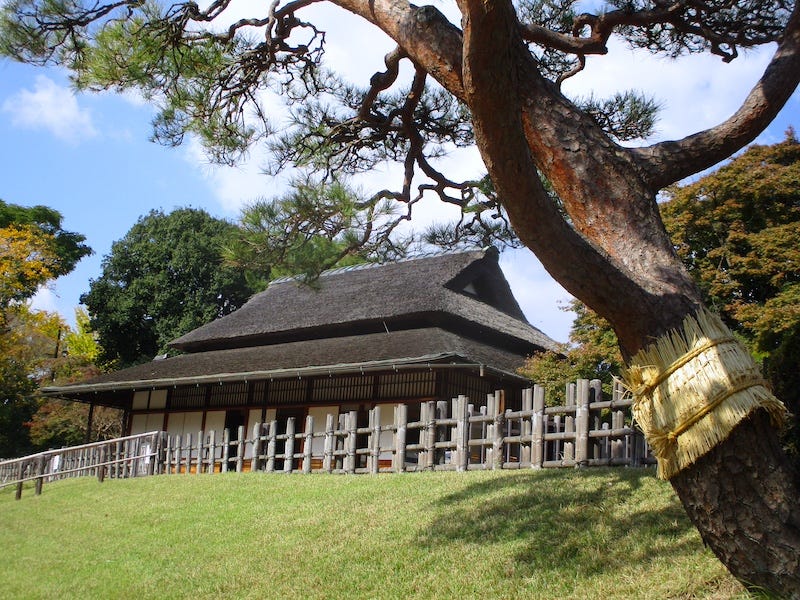
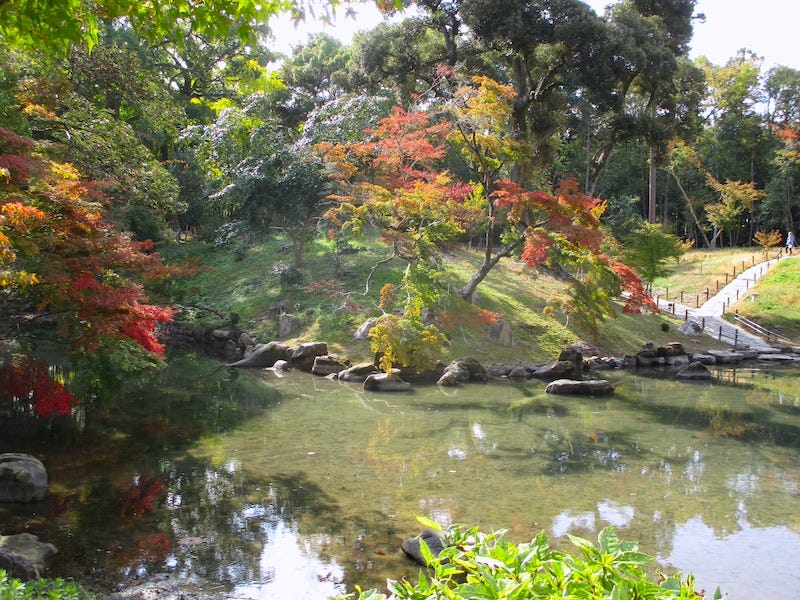
They include Kenroku-en Garden in Kanazawa, Koraku-en Garden in Okayama, and Sankei-en Garden in Yokohama. All of them are huge strolling gardens where you can walk for hours between lakes, rocks, moss, and large trees, such as maple or pines.

Admission to these lovely gardens is either pretty low or, for certain ages, free. Kenroku-en Garden in Kanazawa was also free on Saturday nights in October and November when the garden was lit with thousands of lights.

These famous gardens are more like beautifully maintained huge parks, and you can spend a whole day there. All of them have cafes, restaurants, and picnic places. If you want to avoid crowds, go early in the morning, as soon as the gardens open.

From late February to late April (depending on the area you are visiting), is the time when most trees and shrubs are blooming.

What I found missing — compared to botanical gardens we know in the west — were name tags for the trees, bushes, and (the few) flowers. If you want to learn more about these plants, you would have to take a photo and look it up on a Google plant search app.

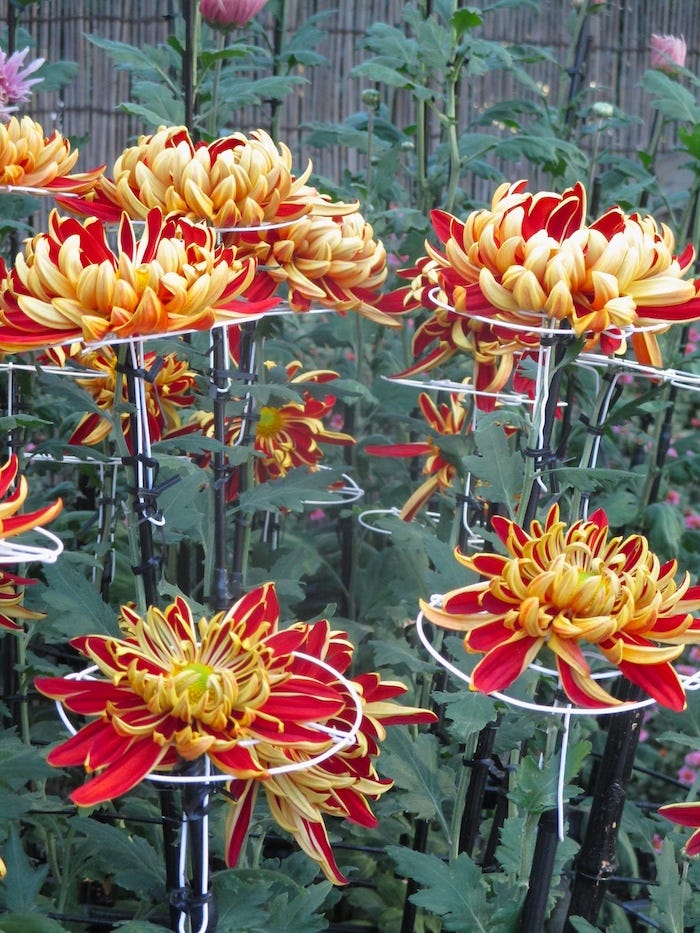
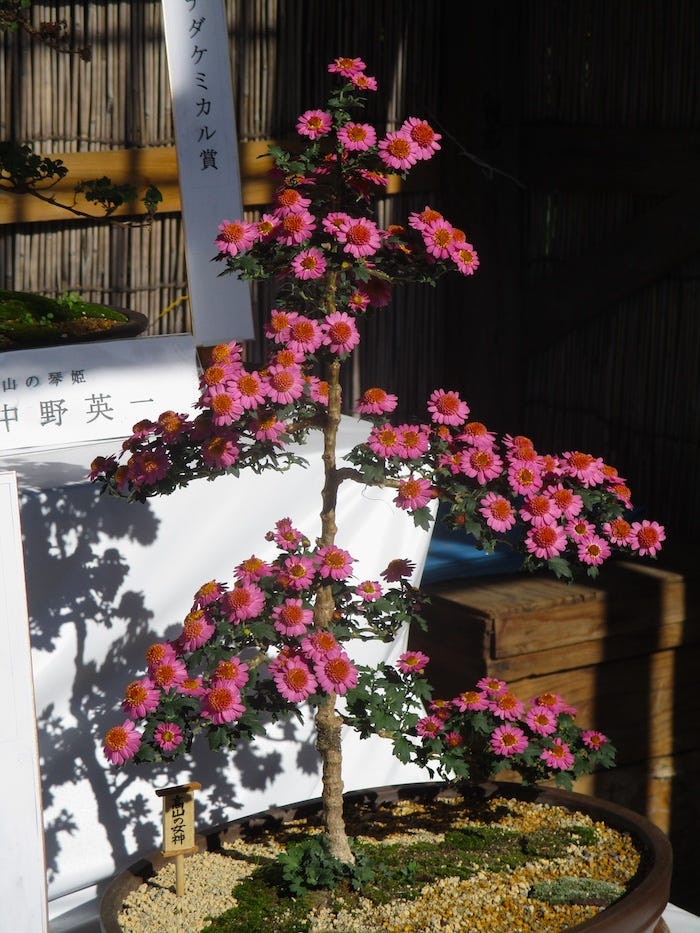
Only the Sankeien Garden in Yokohama had tags on certain plants. This garden was also the one with the most flowers, compared to the others. Here, they also sell plants and are involved in breeding new Chrysanthemum varieties.

On top of the Sankeien Garden is a platform from where I could see Mount Fuji on this beautiful, clear, sunny day. An unexpected highlight!


The most “Classical Japanese” garden in my mind, however, I found at my hotel in the southern city of Kitakyushu. It is called “Art Hotel” and displays an enchanting garden surrounding the building with a variety of trees, small lakes, and rocks.

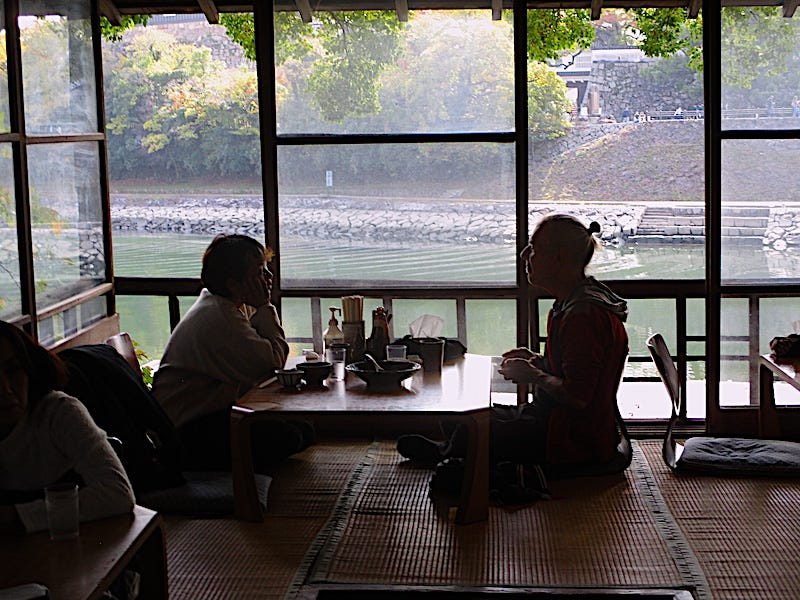
Having breakfast or tea and looking out through floor-to-ceiling glass walls into the garden was such a pleasure. I could have spent hours there.


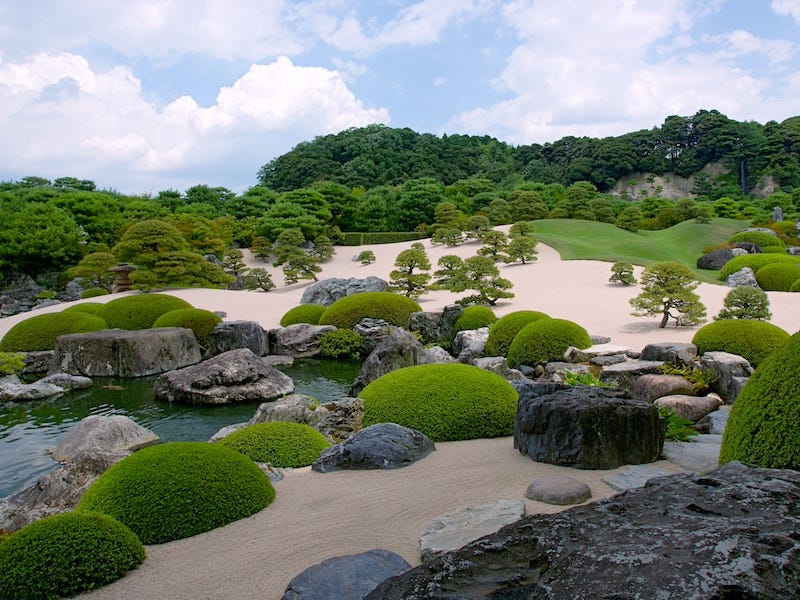
Another Classical Japanese Garden surrounds the Adachi Museum of Art:

This garden has been ranked Japan’s finest for 22 consecutive years by the Journal of Japanese Gardening (also known as Sukiya Living Magazine). The Adachi Museum of Art Garden is located in Yasugi City, north-east of Hiroshima, near the Pacific coast.

The broad sandy expanse represents the sea or a pond. Brooms are used to depict ripples and whirlpools. Stones symbolize mountains or valleys, inviting us into a world of profound tranquillity and meditation.

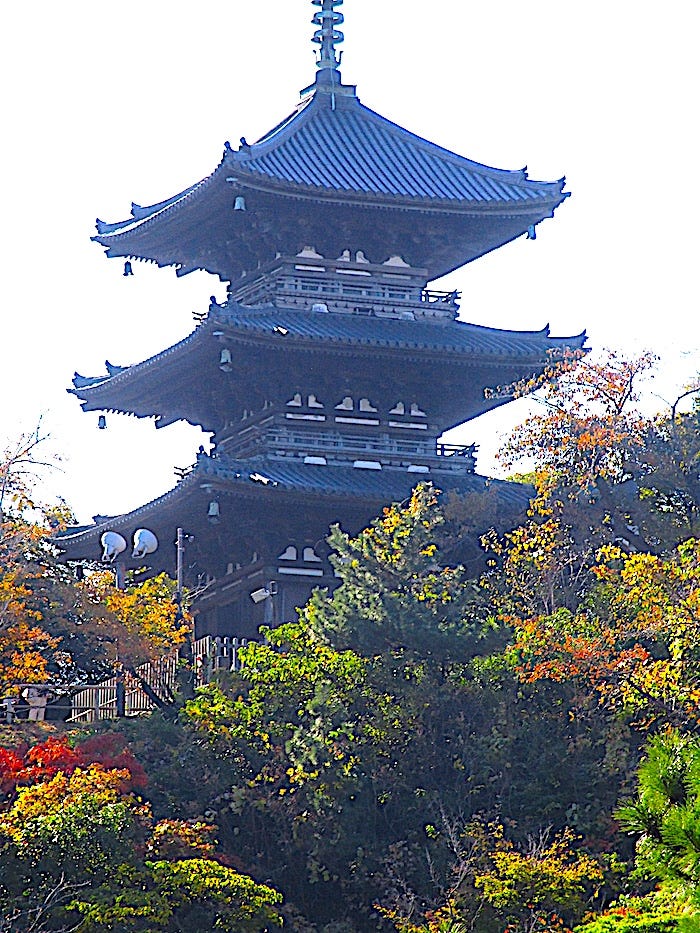
Other places to enjoy beautiful plants and gardens are the surroundings of temples and shrines, or castles in Japan. They all have park-like vicinities.

https://www.sankeien.or.jp/around/course/course02/

https://www.japan-guide.com/e/e4200.html

History of Kenroku-en Garden in Kanazawa https://en.wikipedia.org/wiki/Kenroku-en

https://okayama-korakuen.jp/section/english/

These are the most famous gardens, but there are many more to discover. Over 1,000 public gardens! If you are looking for an escape from the hustle and bustle of cities. Traditional Japanese gardens are popular for their unique architectural designs and tranquil atmospheres.

Here is a long list of gardens that visitors can enjoy: https://kokorojapanstore.com/blogs/blogs/12-best-traditional-japanese-gardens-in-japan-you-should-visit-once-in-your-life

Best Gardens in Tokyo
https://www.bbc.com/travel/article/20251016-a-zen-monks-guide-to-the-best-gardens-in-tokyo

The advice from a Japanese monk about visiting gardens:

“I often notice visitors chatting as they walk, and sometimes even eating on the move,” Masuno says. “I’d gently ask that you pause, keep voices low, and give the garden your full attention.” Travellers should limit their phone use, too. “People can become absorbed in taking photos for social media… It’s perfectly fine to take pictures — but only after you’ve really seen the place. Experience first; record later.”

If you want to read more about what to experience in Japan as a visitor, sign up. The next articles are: “Traveling on the High-speed Shinkansen”, “How I Ended up Accidentally in a Love Hotel”, “Bathing in Hot, Black Sand”, “Hot Springs and Onsens”, “Sweets, Sweets, and More Sweets in Japan”, “Beautiful Train Stations”, Posh Hotels for Low Prices”, and many others.

Saturday, December 6, 2025

The 25 Best Things About Staying in Japan


Culture shock is a friendly description of what I am experiencing right now. I just arrived in Europe from a trip that lasted from late September to this week in Japan.

When friends asked me what I loved so much in this country, I rattled off all the positive experiences I had there and what I am missing in Europe, but also in North America.

.


Besides the wonderful landscapes: beaches with crystal-clear water, mountains of all heights, blue bamboo forests, many volcanoes, often still active, waterfalls and gorges, countless castles, marvelous botanical gardens, and beautiful flowers that bloom into December, the list goes on and on…

Press enter or click to view image in full size

Here is What I Especially Loved:

People in Japan are polite and respectful to their customers. It started already at the airport in Vancouver when the ANA check-in counter staff greeted and bowed to the passengers waiting.

Japanese culture emphasizes harmony, respect, and group collectivism. There was quiet behaviour on planes, trains, and buses, avoiding loud public displays — tourists don’t seem to realize that.

Passengers on trains, trams, or buses are lining up properly and don’t skip lines. Japanese travellers ship their luggage by special, fast, and inexpensive carriers to their destination. In contrast, tourists haul their heavy suitcases (often two suitcases plus a backpack) into a small tram or bus, and block other travelers’ paths.

Onsens — Hot Springs

Haneda Airport in Tokyo, one of the best in the world, has a 24-hour public Onsen (hot springs) and a spa facility called Izumi Tenku no Yu, located on the 12th floor of the Hotel Villa Fontaine Grand (Terminal 3), and is connected to the Haneda Airport Garden. It features natural hot spring baths (including a rooftop open-air bath with views of the airport and Tama River), saunas, and a restaurant.

Press enter or click to view image in full size

You don’t need to be a hotel guest to use the facility, which is supplied with natural Onsen water and offers showers, rental towels, and lounge wear. Plus, you can get a relaxing massage — lovely after a long flight!

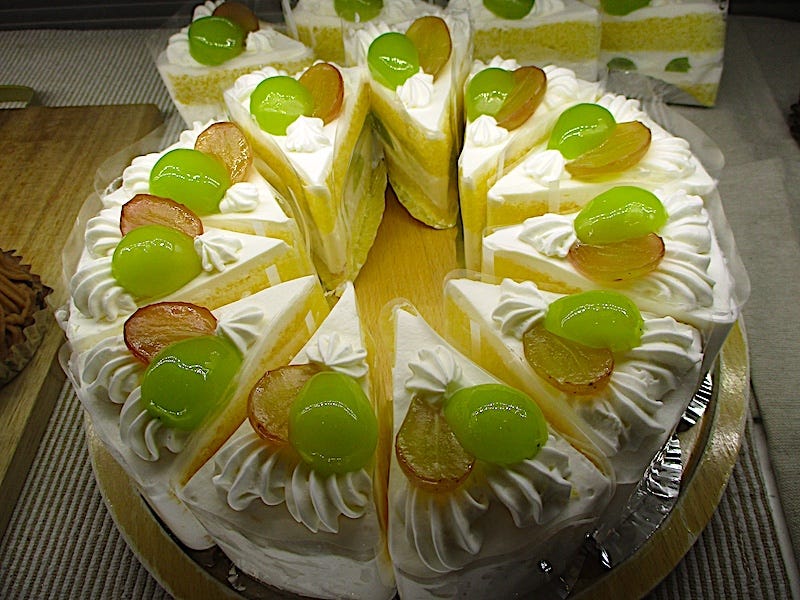
I gained a couple of pounds, especially when traveling by train. The train stations are amazing! They look more like malls with dozens or hundreds of bakeries, confectioneries, and artistic dessert shops.

Press enter or click to view image in full size

The variety is amazing. Even in small train stations, you could often buy outstanding food and sweet treats.

Press enter or click to view image in full size

Throughout cities, fine food is everywhere! Even on the island, where I stayed for weeks, and where mostly only old farmers live, there was a cafe-restaurant that would fit in New York or Paris. Japan is a paradise for foodies!

At most restaurants and hotels in Japan, the service charge is already included, and tipping is not expected. In fact, offering a tip might make staff uncomfortable or confused, especially in more traditional or upscale places. However, I tried to tip every time I took a taxi, and the drivers were all pleased.

Comparing the Way-of-Life Between Japan and Western Countries

I liked that taxis were all super clean and had white covers over the seats. The taxi drivers were well-dressed and groomed, and respectful to passengers. They sometimes even spoke a couple of words in English or used their cell phone to translate.

Press enter or click to view image in full size

Entering a house or a hotel room, the Japanese take off their shoes and put on slippers. In hotel rooms, guests will always find brand-new sealed slippers at the entrance.

Most hotels also offer a bathrobe and slippers. Toothbrush, toothpaste, shampoos, etc., are essentials in every hotel room. They also have tea kettles and often green tea, sugar, etc. One always feels like in a five-star hotel for the price of a two-star place. Hand showers are everywhere, in hotel rooms, or Onsens. Hotels are classier than in Europe or North America. Some of the best breakfast buffets I have ever seen were offered in hotels.

Friendly people helping with directions — especially women (if they speak English). Store employees often translate on phones.

Europe’s beautiful, medieval buildings are covered with graffiti — something you won’t barely ever see in Japan. No cigarette butts, dog poo, or garbage on the city streets - contrary to Europe and other parts of the world.

Japanese people are also not tattooed, unless they belong to a criminal gang.

Local Japanese people are honest. I forgot money on a table, a lady ran after me and handed it back. I also forgot several times to lock my bicycle, but no one stole it. I also left my camera in a taxi cab, and the driver brought it back to the hotel!

It is so relaxing to travel in a country where visitors and locals alike don’t constantly need to watch their belongings.

In Japan, it’s considered bad manners to blow your nose in public, especially in quiet places like trains, offices, classrooms, or elevators. Or god forbid, on a restaurant table! Many people also wear masks.

Press enter or click to view image in full size

People always carry an umbrella with them, for rain or shine. Often, you can borrow them or buy them for a small amount. There are lots of umbrella holders everywhere in the cities or on ferries. 

In restaurants and coffee shops, you will find light boxes, often made of fabric, where guests can place their handbag or laptop while eating.

In Japan, you hand everything to other people, from gifts to business cards, to money with both hands, preferred on small trays.

Press enter or click to view image in full size

Japanese trains are fast and punctual; only once in three months did a train have a 3-minute delay. It prompted a lengthy apology, and the connecting train waited for the passengers. Train travel is easy, even if you don't speak Japanese (mostly marked in English too), and rather cheap, the same for trams in cities.

Press enter or click to view image in full size

There are so many trains throughout Japan that you barely ever need a car. The infrastructure throughout the whole country is exceptional. Ground markings for blind people are everywhere in the country. However, there are not many wide-door restrooms for the handicapped and wheelchair users. Otherwise, toilets are state-of-the-art, and most of the time the rims are heated.

Press enter or click to view image in full size

There were only four things I really didn’t like:

  • Few folks spoke English, even though they learn it for years in school. This happened mostly in the southern part of Japan. And strangely, even in some tourist information offices.
  • Many restaurants, ferries, and even saunas, or relaxation rooms in Onsens are equipped with TVs. The program is almost worse than in North America. Bring a headset with you to avoid the noise!
  • Stores in the South or rural areas, or small ferries, don’t accept credit cards. Bring enough cash.
  • During the Pacific War, Allied forces conducted air raids on Japan from 1942 to 1945, causing extensive destruction to the country’s cities and killing between 241,000 and 900,000 people. This might be the reason that modern cities often don’t have heritage buildings and are rebuilt in an unattractive way. Beautiful houses or restored castles are mostly found in villages.
Press enter or click to view image in full size